THE DEFINITION
What is system commissioning — and how do FAT and SAT differ?
System commissioning is the stage that brings an installed system fully into operation
and integrates it into your line — run together with the equipment upstream and
downstream, every function exercised and tuned, then signed off ready for production. It
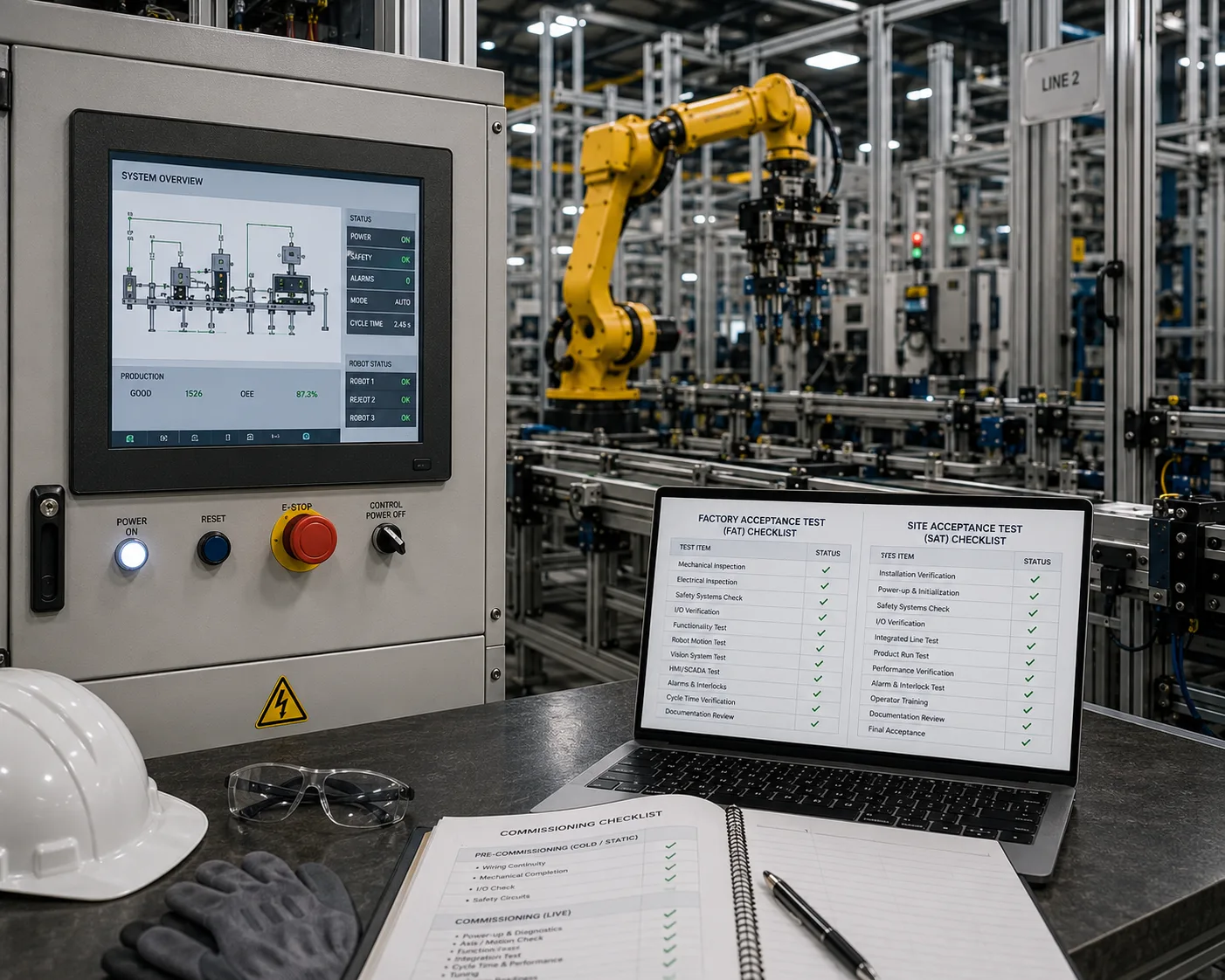
runs in two stages: pre-commissioning in the factory — the de-energized
cold or static checks (wiring continuity, mechanical completion, I/O, and safety circuits)
that confirm the build before it ships — and re-commissioning on site,
which runs and tunes the installed, integrated line through to go-live.
Acceptance testing is how that work gets signed off, and it comes in two stages.
A Factory Acceptance Test (FAT) proves the system is built correctly
before it ships — run at the build site against the agreed specification. A
Site Acceptance Test (SAT) proves the installed machine runs your actual
parts correctly on site, in your real production environment. The clean line: FAT
checks it was built right; SAT checks it runs right where it lives. Any open items become
a punch list carried from FAT into SAT.
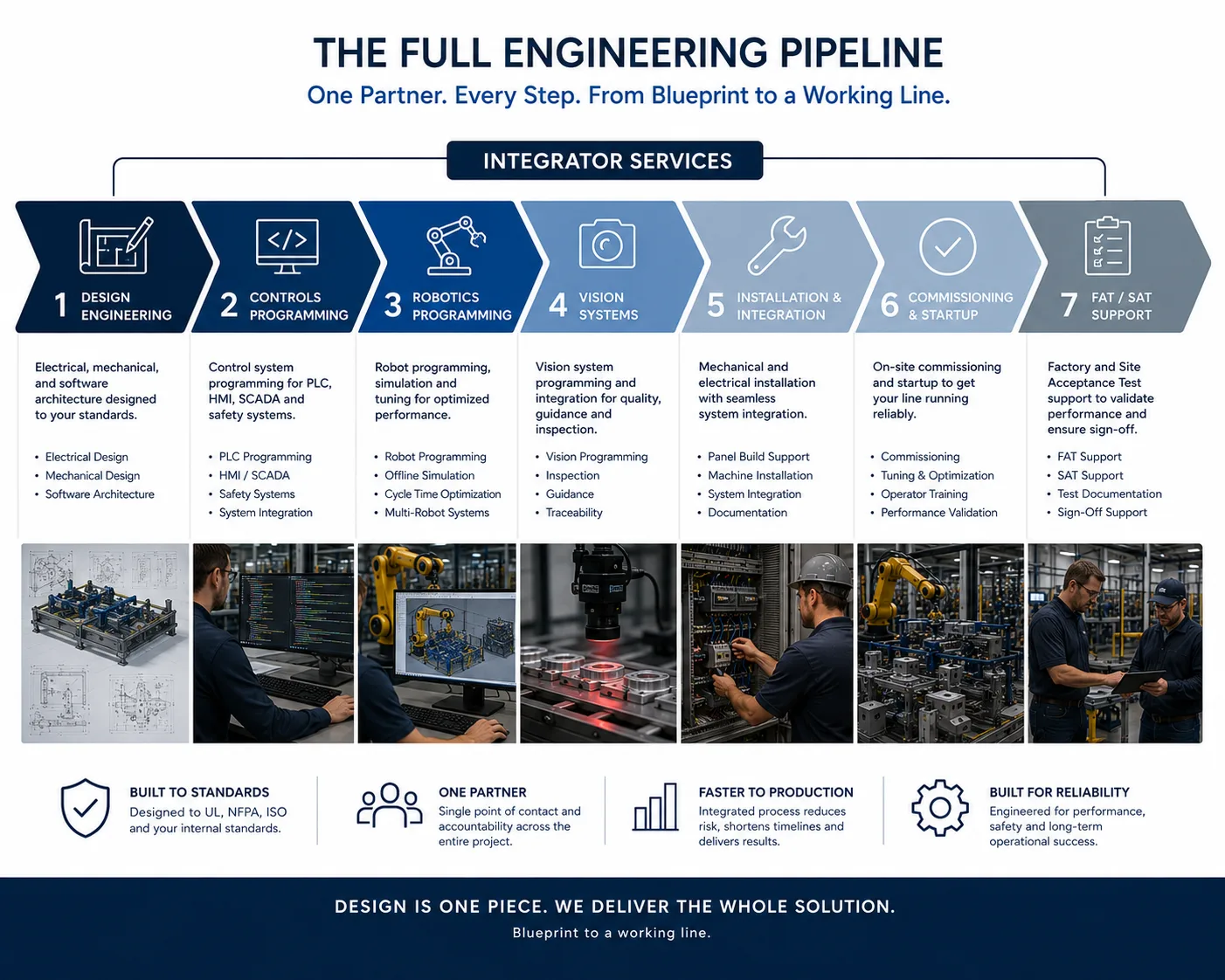
So the on-site sequence runs install → re-commission into the line → SAT
→ go-live, with pre-commissioning and the FAT completed in the
factory before shipment. The faults that wreck a go-live
are almost always logic and integration faults — which is why we pre-test
the control software we develop against a
digital twin in virtual commissioning before a single
cable is pulled. The on-site team then spends its time installing and tuning, not
debugging.