INTEGRATOR SERVICES

Industrial design, the backbone of industrial automation.

The engineering foundation every successful automation line is built on.

Industrial automation engineering design across three disciplines — electrical design, mechanical design, and software architecture. The engineering foundation every successful automation line is built on, delivered to your standard and ready for fabrication or implementation. Engineering capacity for system integrators and machine builders, inside your toolchain.

PITCO engineers developing electrical, mechanical, and software architecture design for an automation build.
THE SERVICES

Three design disciplines. One engineering partner.

Engage a single discipline or the full design pipeline. PITCO works inside your standards and your toolchain, across all major platforms and industries.

Electrical Design

Electrical systems that are efficient, safe, and reliable. PITCO specializes in control panel design, power distribution, motor controls, and safety systems — engineered to your standard and ready for fabrication and build.

Our designs account for energy efficiency and reduce long-term operational costs. We work closely with clients across automotive manufacturing, life sciences, and beyond, tailoring every detail to your specific requirements.

Mechanical Design

Mechanical solutions that are innovative and practical — machines, fixtures, robot cell layouts, and custom tooling designed for durability, efficiency, and ease of operation across oil and gas, steel production, food and beverage, and other demanding industries.

From small components to large machinery, our designs are built to last. We collaborate closely with clients to understand their challenges and goals, delivering mechanical designs that exceed expectations.

Software Architecture

The digital backbone for industrial operations — scalable, secure software architecture for controlling machinery, managing data, and integrating systems. Built for automotive manufacturing, life sciences, space exploration, and more.

We prioritize scalability and security so your systems grow with your business without compromising safety or performance. Our team works closely with clients to deliver software solutions that are effective and futureproof.

ELECTRICAL DESIGN

Efficient, safe, and reliable electrical systems.

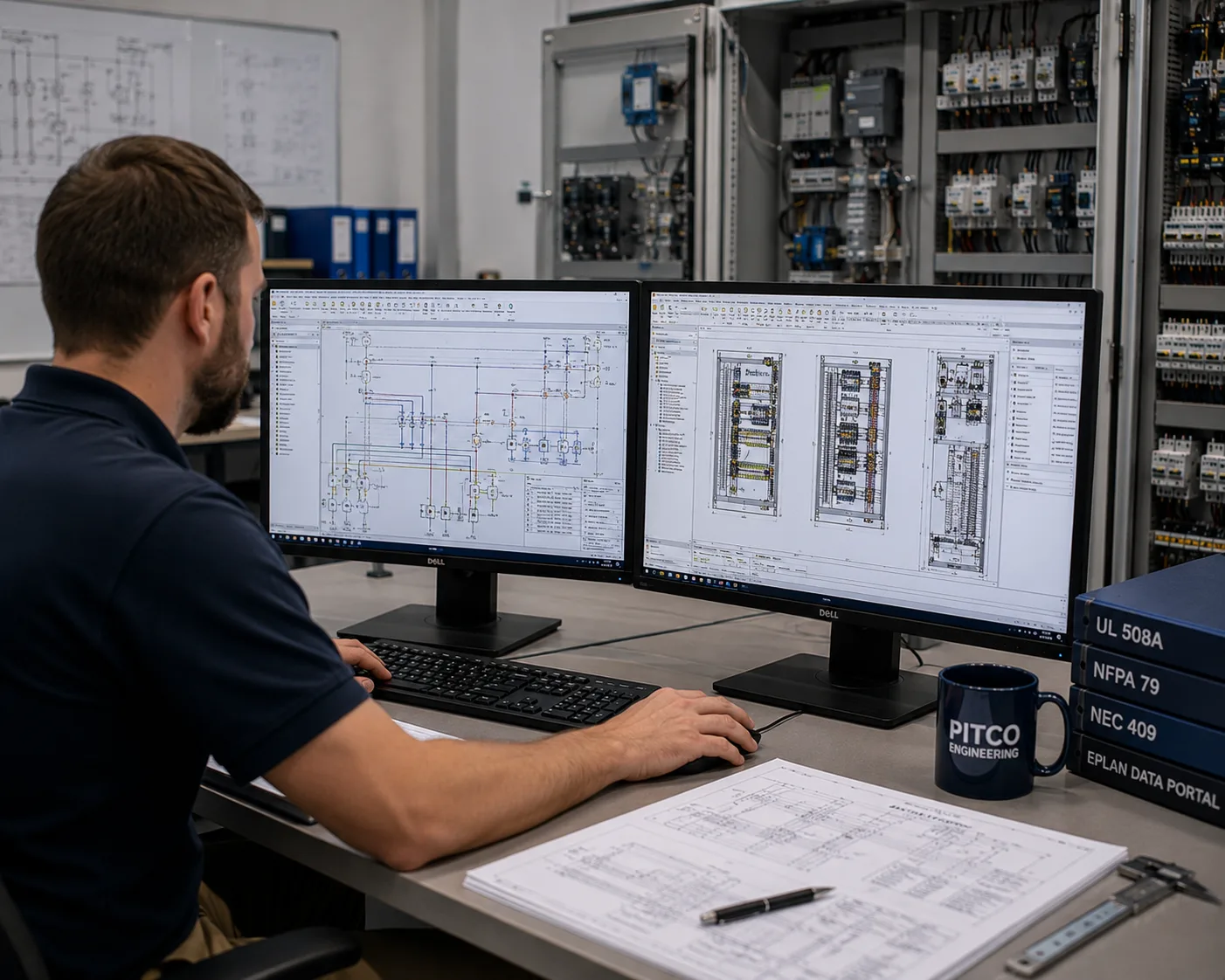
Electrical design is the physical and electrical blueprint of the machine — control panel design, power distribution, motor controls, and safety circuits. PITCO produces the schematics, panel layouts, and bill of materials a panel shop builds from, designed to standards like UL 508A, NFPA 79, and NEC Article 409, with a validated Short-Circuit Current Rating (SCCR).

We design inside your toolchain — AutoCAD Electrical, EPLAN, or your in-house template — so the deliverables drop straight into your standard. Whether it's a new line or an upgrade to existing infrastructure, every schematic, terminal, and component is traceable and fabrication-ready.

Energy efficiency and serviceability are designed in, reducing long-term operational cost. The electrical package is the hardware foundation the controls and robotics programming then runs on — two halves of the same build, delivered by one engineering partner.

Electrical design schematics and control panel drawings produced by PITCO engineers.
MECHANICAL DESIGN

Innovative and practical mechanical solutions.

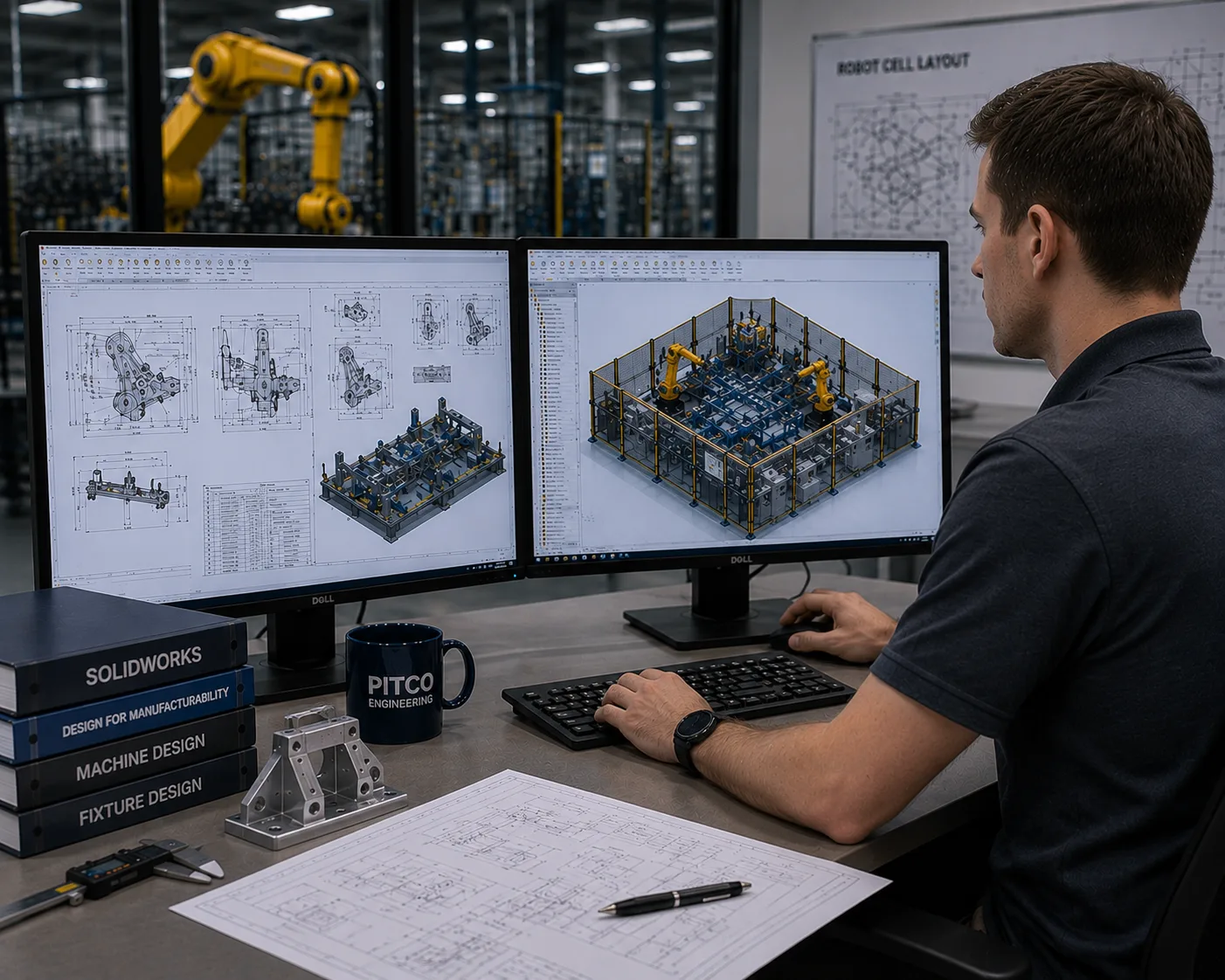
Mechanical design covers the machines, frames, and motion — custom machines, fixtures, robot cell layouts, and tooling — modeled in SolidWorks and detailed for fabrication. Our work spans demanding industries including oil and gas, steel production, and food and beverage processing.

We design for durability, efficiency, and ease of operation, and we shape the mechanical layout so it's reachable and sequenced for automation — fixtures that locate parts repeatably and robot cells laid out for cycle time, not just to fit the floor. Design for Manufacturability is built in from the first sketch.

From small components to large machinery, our designs are made to last. When the layout needs proving before steel is cut, we can validate it against a digital twin so reach, clearance, and cycle time are confirmed on a model first.

Mechanical design drawings and robot cell layout produced by PITCO engineers.
SOFTWARE ARCHITECTURE

The digital backbone for industrial operations.

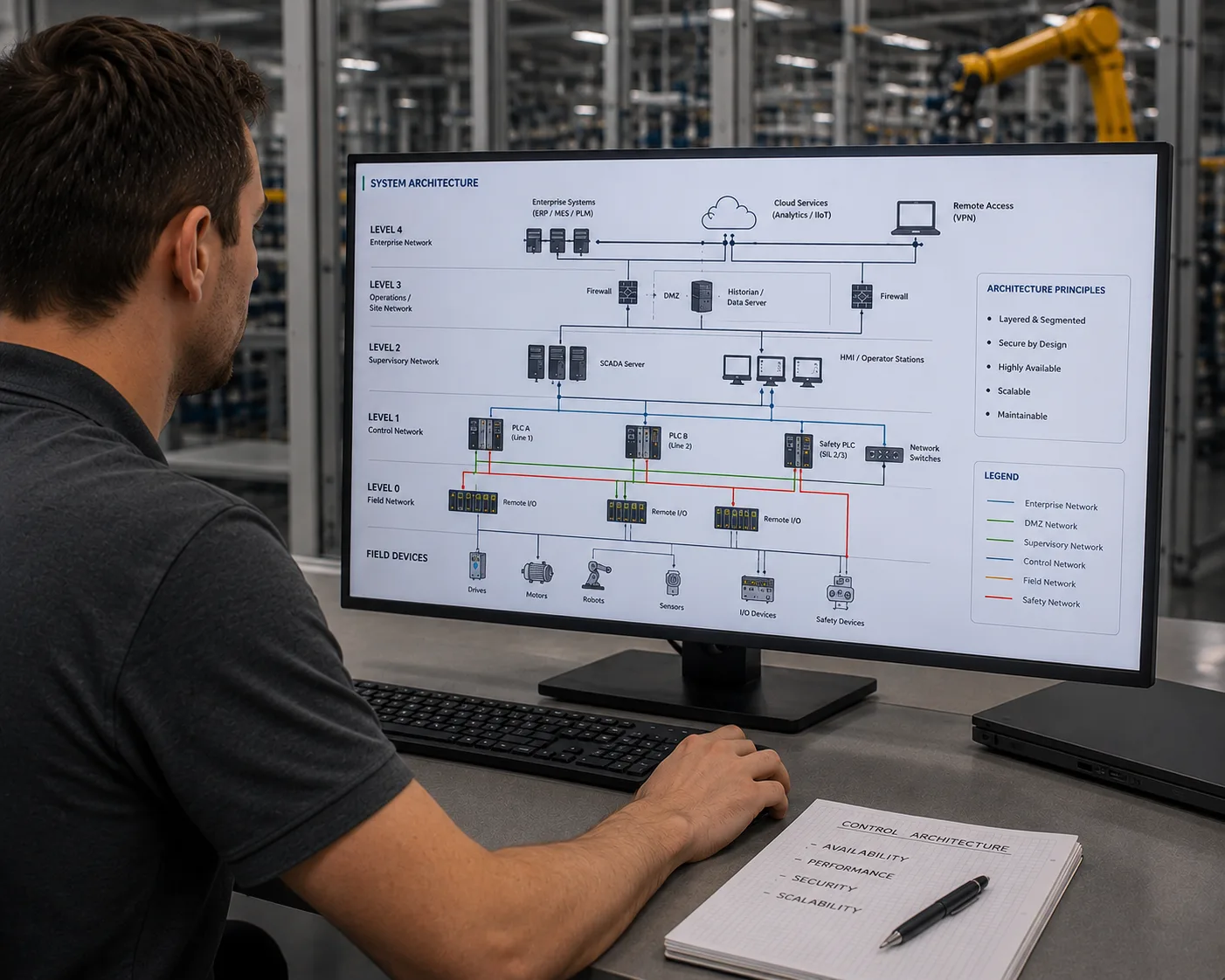
Software architecture is the structural blueprint for the control software — decided before the code is written. We define how the layers fit together across PLC, HMI, SCADA, and data and enterprise systems, how machinery is controlled, and how systems integrate. It's distinct from writing the program: architecture decides the shape, the controls programming fills it in.

Industrial software is real-time and safety-critical, so the architecture has to balance millisecond response, distributed control, and fault tolerance — not just tidy code. We design for usability and clean integration across all major platforms, for industries from automotive manufacturing to life sciences and space exploration.

Scalability and security are designed in, so systems grow without compromising safety or performance. With the architecture set, our control system development and programming team builds it out — and we can prove the control logic against a digital twin before it ever reaches the floor.

Software architecture diagram and system integration designed by PITCO engineers.
THE DEFINITION

What is industrial automation engineering design?

Industrial automation engineering design is the work of specifying how an automated machine or line is physically and digitally built, across three disciplines: electrical design (panels, power distribution, schematics), mechanical design (machines, fixtures, robot cell layouts), and software architecture (the structural blueprint for the control software). Design decides what gets built and to what standard.

Here's the clean line buyers ask about: design defines what to build; controls programming and the build come after. Electrical design is the hardware blueprint — the panel and schematics a shop fabricates from. Controls engineering is the logic that runs on it. Software architecture sets the shape of the control software before a line of code is written. PITCO delivers the design, and our development and programming team builds it.

For system integrators and machine builders, that makes design the discipline you engage to add engineering capacity without hiring — inside your standards and your toolchain. Every package comes back fabrication-ready, built to the engineering standard your line is held to.

DEFINITION FAB-READY Engineering design 01 ELECTRICAL Panels · power · schematics SAFE 24V HARDWARE BLUEPRINT 02 MECHANICAL Machines · fixtures · cells PHYSICAL BUILD 03 SOFTWARE Architecture before code HMI OPERATOR SEQUENCER RECIPES · STATES I/O · SAFETY · FIELDBUS STRUCTURAL BLUEPRINT YOUR STANDARDS · YOUR TOOLCHAIN
FAQ

Engineering design, answered

The questions integrators and machine builders ask before they hand off design work.

What is industrial automation engineering design?

It's the work of specifying how an automated machine or line is physically and digitally built, across three disciplines: electrical design (panels, power distribution, schematics), mechanical design (machines, fixtures, robot cell layouts), and software architecture (the structural blueprint for the control software). Design defines what gets built and to what standard; controls programming and the build come after.

What is the difference between electrical design and controls engineering?

Electrical design produces the physical electrical system — control panel layout, power distribution, motor controls, safety circuits, and the schematics and bill of materials a panel shop builds from. Controls engineering produces the automation behavior — the PLC, HMI, and robot programming that makes the machine run. Electrical design is the hardware blueprint; controls is the logic that runs on it. PITCO delivers both, with the programming covered on the Development page.

What does an electrical design package include?

A fabrication-ready electrical design package typically includes the control panel layout, electrical schematics and wiring diagrams, a bill of materials with part numbers, power distribution and motor-control design, safety-circuit design, and the documentation a panel shop needs to build the panel — designed to standards such as UL 508A, NFPA 79, and NEC Article 409, including a validated Short-Circuit Current Rating (SCCR).

What is software architecture in an industrial control system?

Software architecture is the structural blueprint for the control software — how the layers fit together (PLC, HMI, SCADA, data and enterprise systems), how machinery is controlled, how data is managed, and how systems integrate. It's decided before the code is written. A sound architecture is scalable, secure, and real-time, so the system can grow without compromising safety or performance.

Can a system integrator outsource engineering design to add capacity?

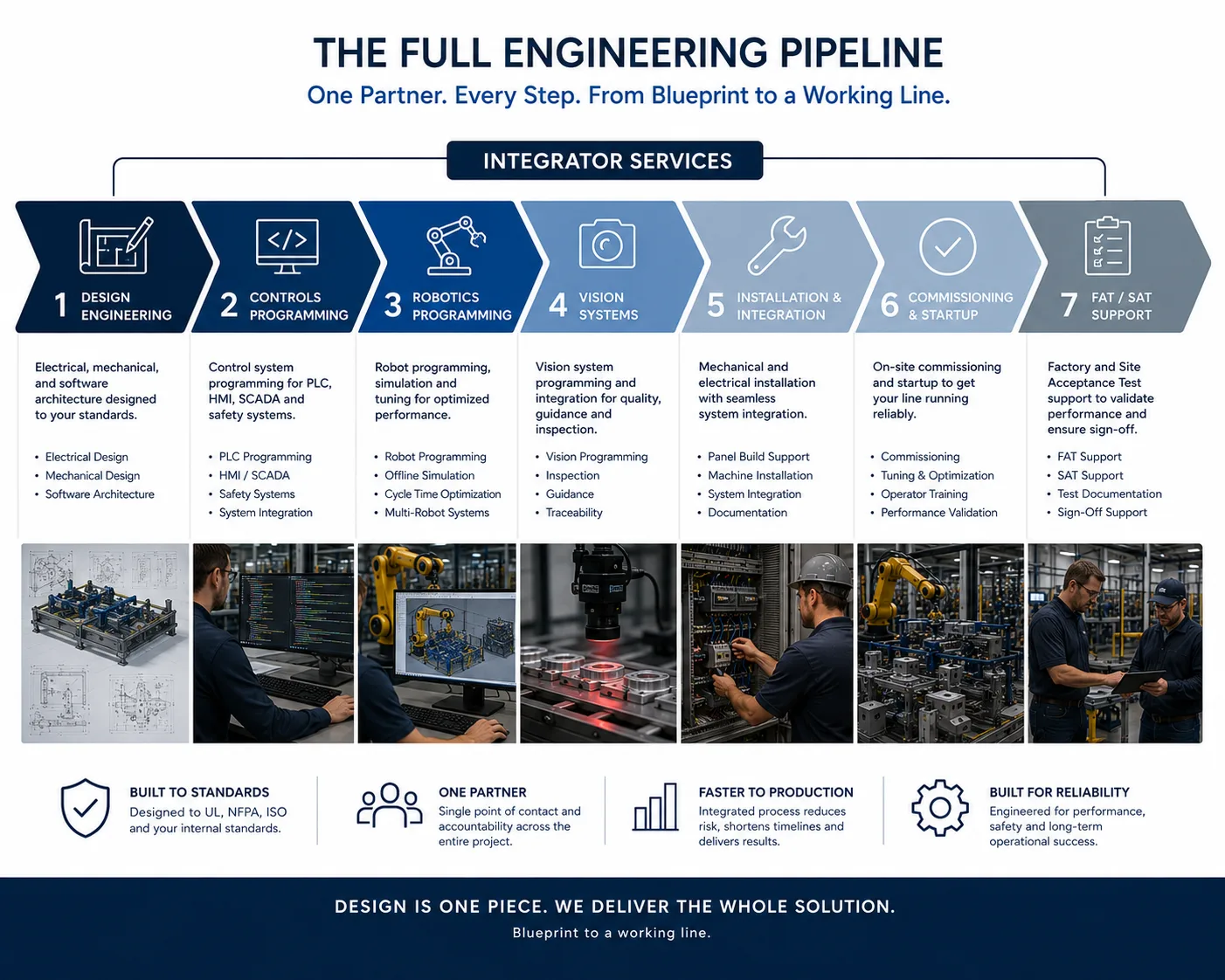
Yes. PITCO provides electrical, mechanical, and software architecture design as overflow or full-project capacity for system integrators and machine builders, working inside your standards and your toolchain — AutoCAD Electrical, EPLAN, or SolidWorks. You add engineering hands without hiring, and the deliverables come back ready to fabricate or implement against your own standard. It's one part of PITCO's full integrator services pipeline.

CONTACT

Have a design project that needs engineering hands?

Tell us about your build — an engineer will be in touch.

I am a…
Need engineering design capacity for your next build? Discuss a Design Project