THE DEFINITION
What is control system development?
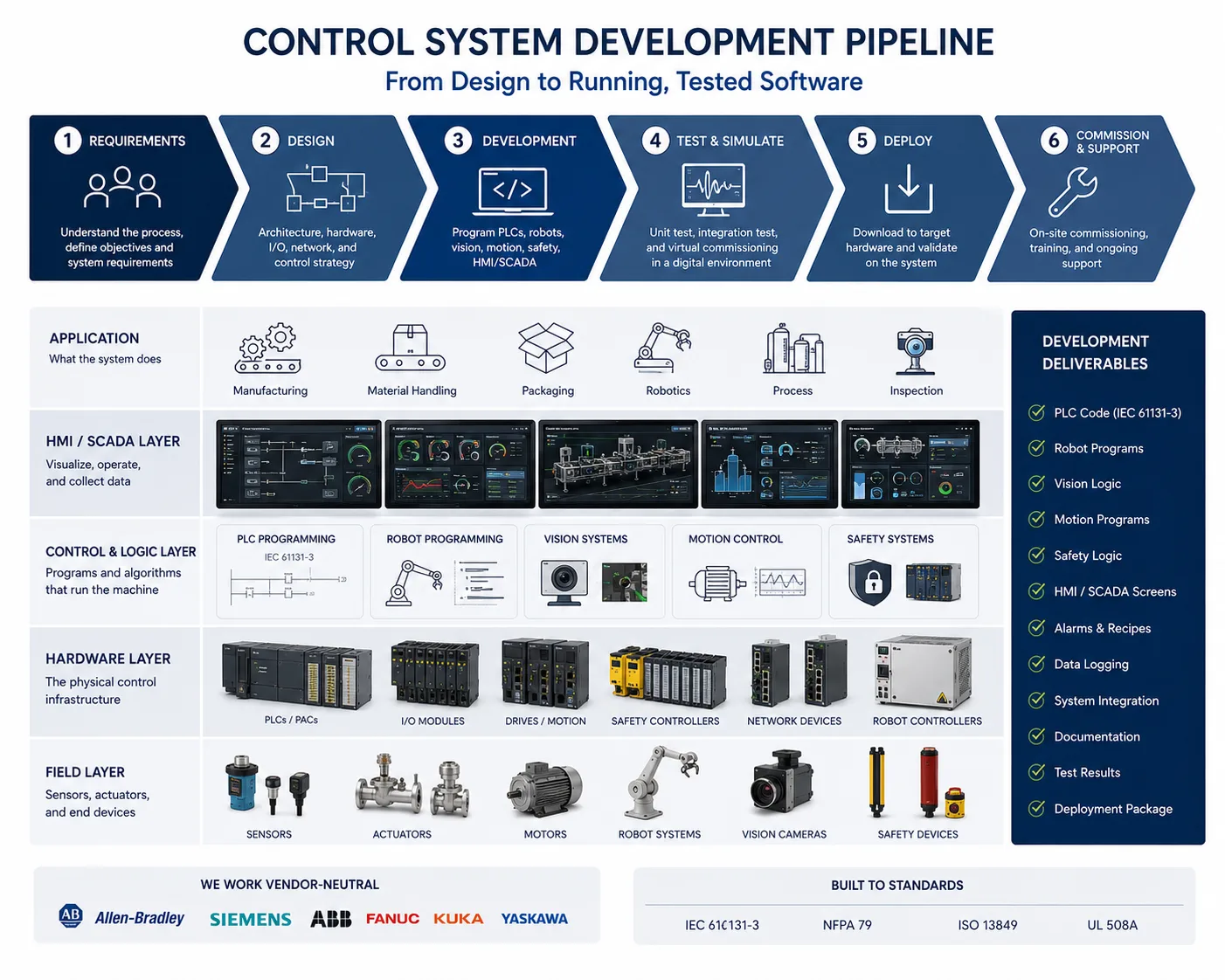
Control system development is the engineering work of turning a control system design
into running, tested software — the PLC programs, robot routines, machine-vision logic,
motion and safety control, and HMI and SCADA screens that make a machine or line do its
job. It's the build half of automation: a designer specifies what the system must do,
and development produces the code that makes it happen.
It's easy to confuse with the design step, so here's the clean line:
control system design decides the architecture —
hardware, I/O, network, and the logic the system needs; control system development
writes and tests the code that delivers it. PLC programming is one slice of
development, alongside robot programming, vision, motion, safety, and the HMI/SCADA
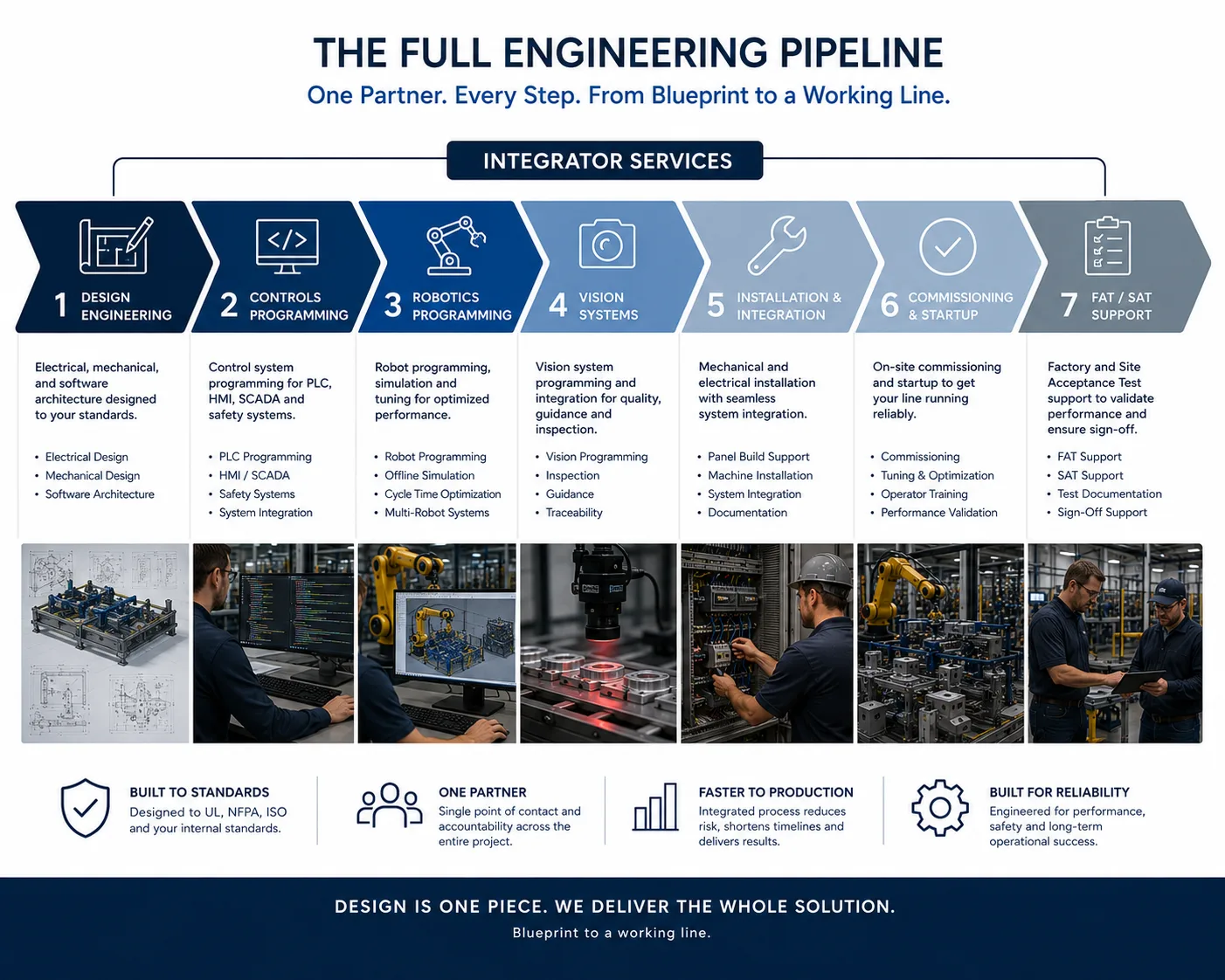
layer. PITCO does the development to your standard, then makes the
deployment go right.
PLCs are programmed in the standardized IEC 61131-3 languages — ladder logic, structured
text, and function block — and we work vendor-neutral across Allen-Bradley, Siemens,
and the major robot platforms (ABB, FANUC, KUKA, Yaskawa). The result is control software
that matches the design, the line, and the way your team already works.