
Understand what is happening
Use machine data, images, and operating history to recognize patterns, detect changes, and make useful information available to the people and systems that need it.
Developing systems that learn, adapt, and act.
At PITCO Engineering, we research and develop AI that connects software with the physical world. We bring our experience in controls and automation to systems that can interpret what is happening, respond to change, and help people get more done. Our work spans industrial operations, robotics, and the engineering tools used to build them.
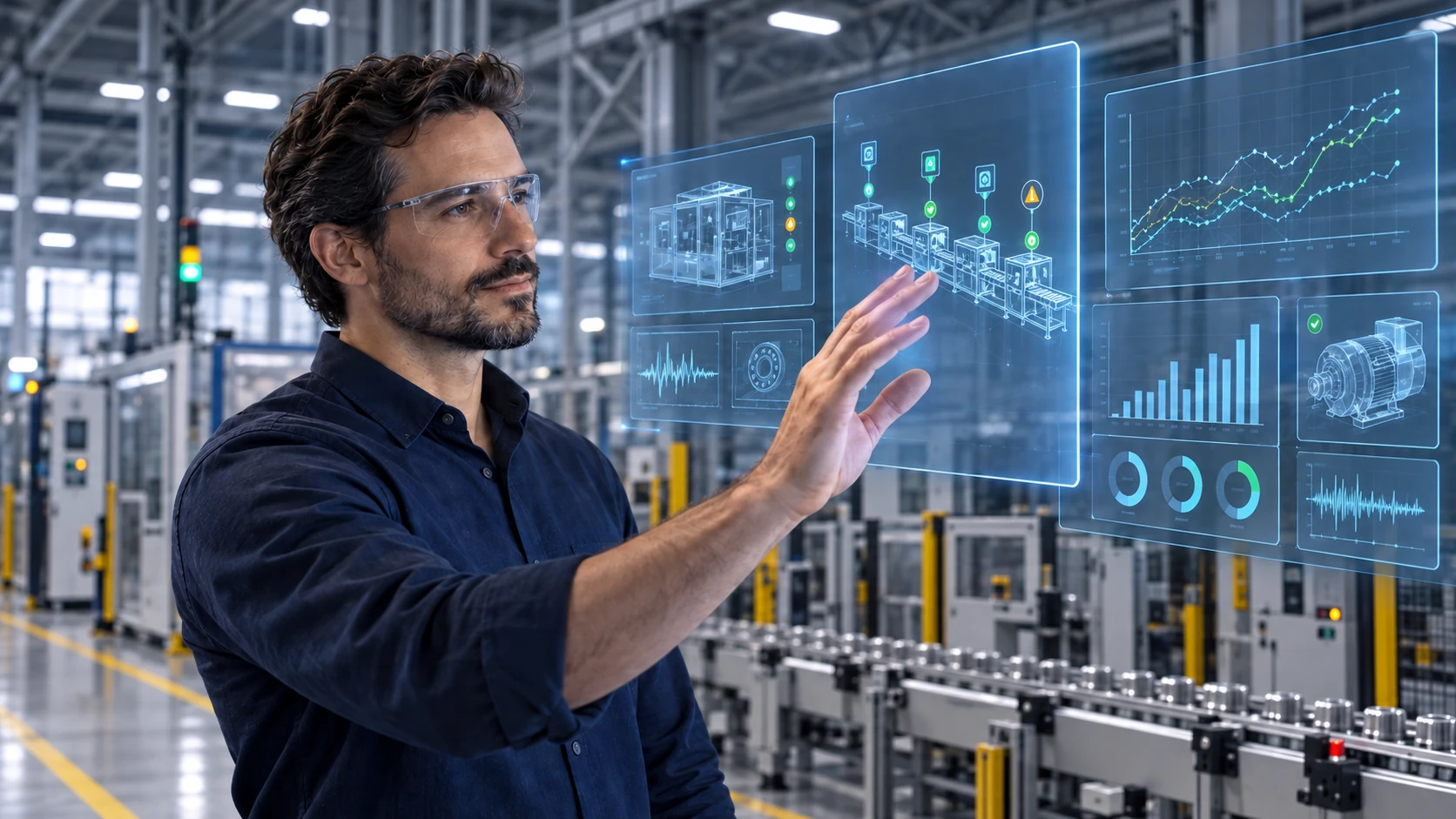
We are developing the capabilities that let software work with real equipment, real environments, and the people responsible for them.
Use machine data, images, and operating history to recognize patterns, detect changes, and make useful information available to the people and systems that need it.
Develop systems that can respond to different products, changing environments, and unfamiliar situations. The goal is to reduce the amount of reprogramming each change demands.
Bring perception, planning, and control together so AI can contribute to how a system operates. This includes decision support, adaptive automation, and research into greater autonomy.
Manufacturing brings these questions together on the same production floor. Equipment condition, product quality, material flow, and energy use all affect how a line performs. Our AI research explores how to connect those signals and use them to improve the way production runs.
Predicting maintenance needs and recognizing quality problems are starting points. We are also interested in systems that adjust to changing conditions, coordinate work across machines, and learn from operating results. The longer-term ambition is a factory that can manage more of its routine operation and improvement, with clear responsibilities for people and automated systems.
Anticipate problems. Recognize equipment wear and quality changes early.
Respond to variation. Adapt to changing products, materials, and operating conditions.
Coordinate the work. Connect decisions across equipment, material flow, and production planning.
Our research asks how learning, adaptation, and autonomy can serve different industries. These applications help shape both the problems we explore and our longer-term direction.
We explore how AI can support adaptive vehicle production, from inspection to robots that respond to changing parts and tasks. Connected vehicles and autonomous driving also raise research questions about perception, coordination, and decisions in a changing environment.
Complex biological and research data offer opportunities for pattern recognition and decision support. We are interested in how AI could assist research workflows and, over time, contribute to drug discovery and more personalized treatments.
Research opportunities extend from monitoring growing conditions to processing, inspection, and distribution. We explore how learning systems could help make production more consistent, use resources more efficiently, and respond to variation in raw materials.
Equipment condition and changing operating conditions matter across energy systems. Our research interests include anticipating maintenance needs, supporting complex operations, and improving how energy is managed and conserved.
Steel production connects demanding processes with quality, energy, and material use. We explore how AI could help adjust operating parameters, detect quality changes, and support more adaptive production, recycling, and waste reduction.
Space systems must interpret unfamiliar surroundings and operate with limited human intervention. Our interests include autonomous navigation, onboard decisions, and robots that can plan and carry out tasks. This connects directly with our satellite robotics research.
We start with the behavior a system needs to achieve. What must it recognize? What can it change? How will we know whether it works? Those questions guide the data, models, software, and controls we develop.
Our development approach moves from an idea to a prototype, then through testing and refinement. We examine how the system behaves when inputs change, where it fails, and how it fits into the equipment and workflows around it. The findings shape the next iteration.
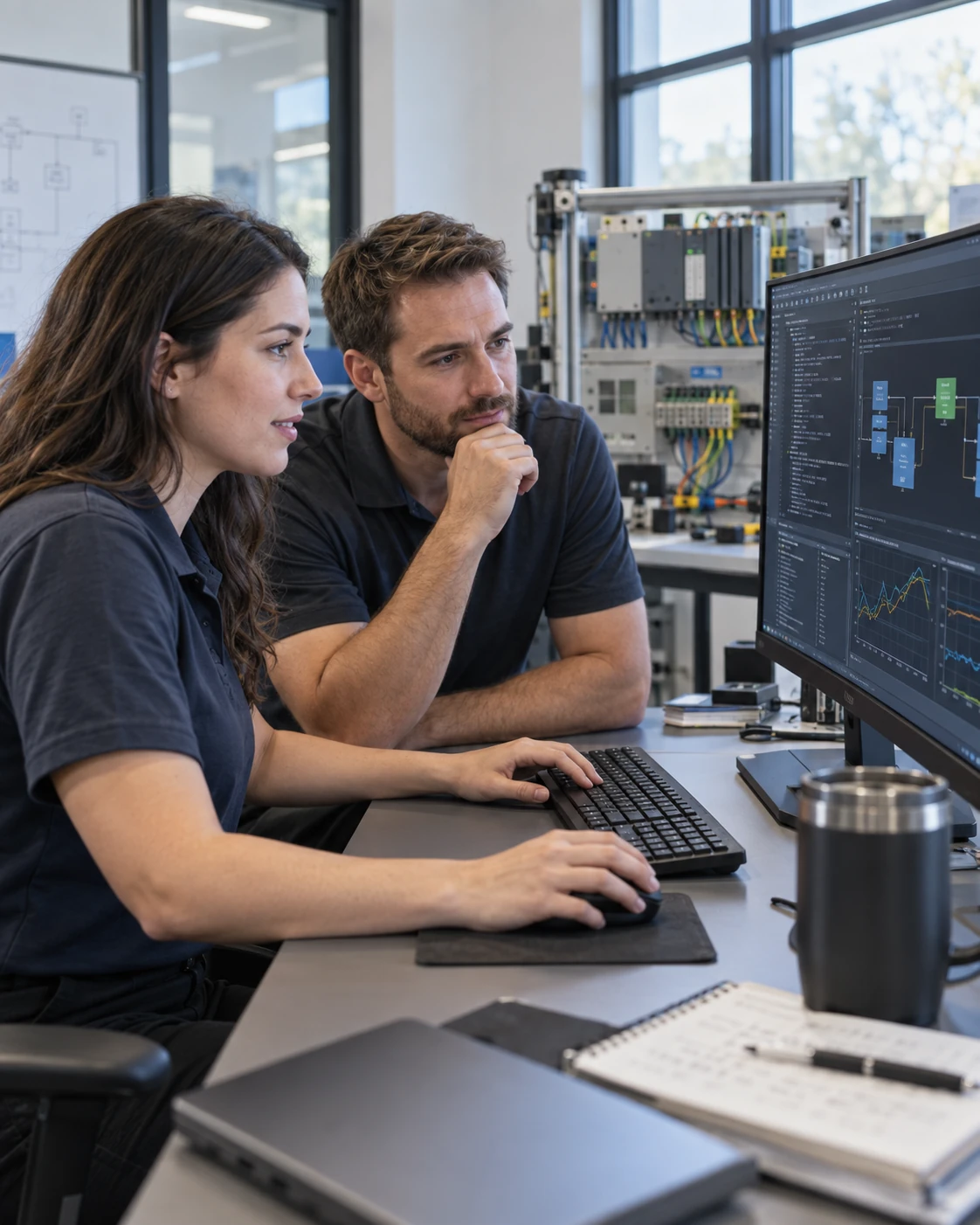
Useful research needs domain knowledge as well as software. We welcome collaboration with industry and research partners who bring practical problems, operating experience, and different perspectives.
We consider privacy, traceability, and human oversight as we develop a system. People need to understand what it can do, where its limits are, and who is responsible for its actions.
AI development depends on people learning alongside the technology. Education, training, and the exchange of engineering knowledge are part of how we prepare for the next generation of systems.
AEOS is one concrete program within our AI research. We are developing an agentic engineering platform that uses a manufacturer's standards to generate engineering deliverables. Start with Standard provides the foundation: defined requirements, reusable engineering rules, and a consistent basis for the work. AEOS applies AI to producing that work, with engineers able to review the results.
We research and develop AI for industrial operations, robotics, and engineering software. Our work explores how systems can interpret data, adapt to changing conditions, and connect decisions with action. AEOS is one development program within that broader work.
Manufacturing is a central application, alongside automotive, life sciences, food and beverage, energy, steel, and space exploration. These areas present different problems but share questions about learning, adaptation, and autonomy.
The role depends on the application. AI can support people making decisions, contribute to adaptive control, or enable autonomous functions. We define its authority, interfaces, and operating limits as part of the system design, including the controls and safety functions around it.
AEOS is PITCO's engineering-platform development program. It applies AI to generating engineering deliverables from a manufacturer's defined standards. It is one application of our AI work, alongside our research into industrial and autonomous systems.
Yes. We welcome conversations with manufacturers, technology developers, and research teams. Bring a problem, an idea, or an area of expertise, and we can discuss the research questions and what it would take to develop and evaluate a solution.
AI connects with our work in robotics and smart homes. Each presents a different setting for sensing, learning, and coordinated action.
Tell us what you want a system to do, what makes it difficult, and where you see room for AI.