
Understand the surroundings
Use vision, sensors, and operating data to recognize objects, positions, and changes in the workspace. A robot needs enough understanding of its surroundings to respond to what is actually there.
Robots that can respond to the work around them.
At PITCO Engineering, we develop robotic systems that can sense their surroundings, respond to change, and carry out useful work. Our focus is the controls, AI, and software that connect those abilities. We want robots to take on more routine and demanding tasks, while giving people better ways to guide, supervise, and work with them.
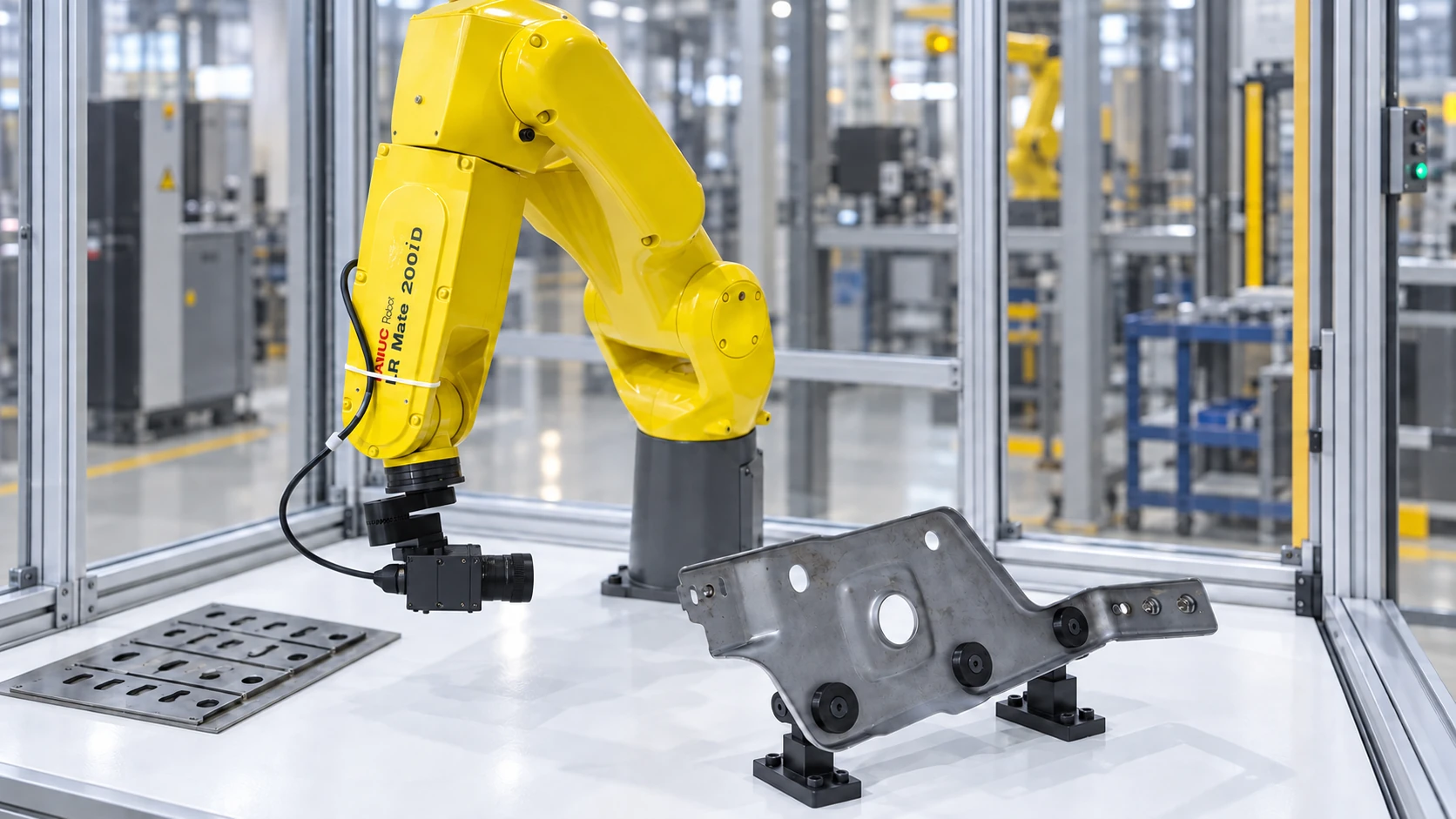
We are developing the connections between what a robot perceives, what it decides, and how it moves.
Use vision, sensors, and operating data to recognize objects, positions, and changes in the workspace. A robot needs enough understanding of its surroundings to respond to what is actually there.
Explore how AI and machine learning can help a robot handle variation in parts, tasks, and environments. We are working toward systems that need less fixed programming for every new situation.
Connect perception and planning with robot controls, tooling, and the surrounding equipment. Our research looks at the complete behavior: choosing an action, carrying it out, and checking the result.
Manufacturing gives robotics a wide range of practical problems to solve. Handling materials, tending machines, assembling parts, and inspecting work all depend on coordinating motion with the process around it. Our research explores how robots can do that work with greater flexibility and consistency.
We are particularly interested in tasks where the conditions change. Parts may arrive in different positions, products may vary, or the next task may require a different sequence. Developing the perception, controls, and software to handle those differences is central to our work in adaptive robotics.
Recognize the change. Locate a part, identify a difference, or detect an unexpected condition.
Choose the response. Adjust a motion, select a sequence, or request an operator's input.
Check the result. Use feedback to confirm what happened and determine the next action.
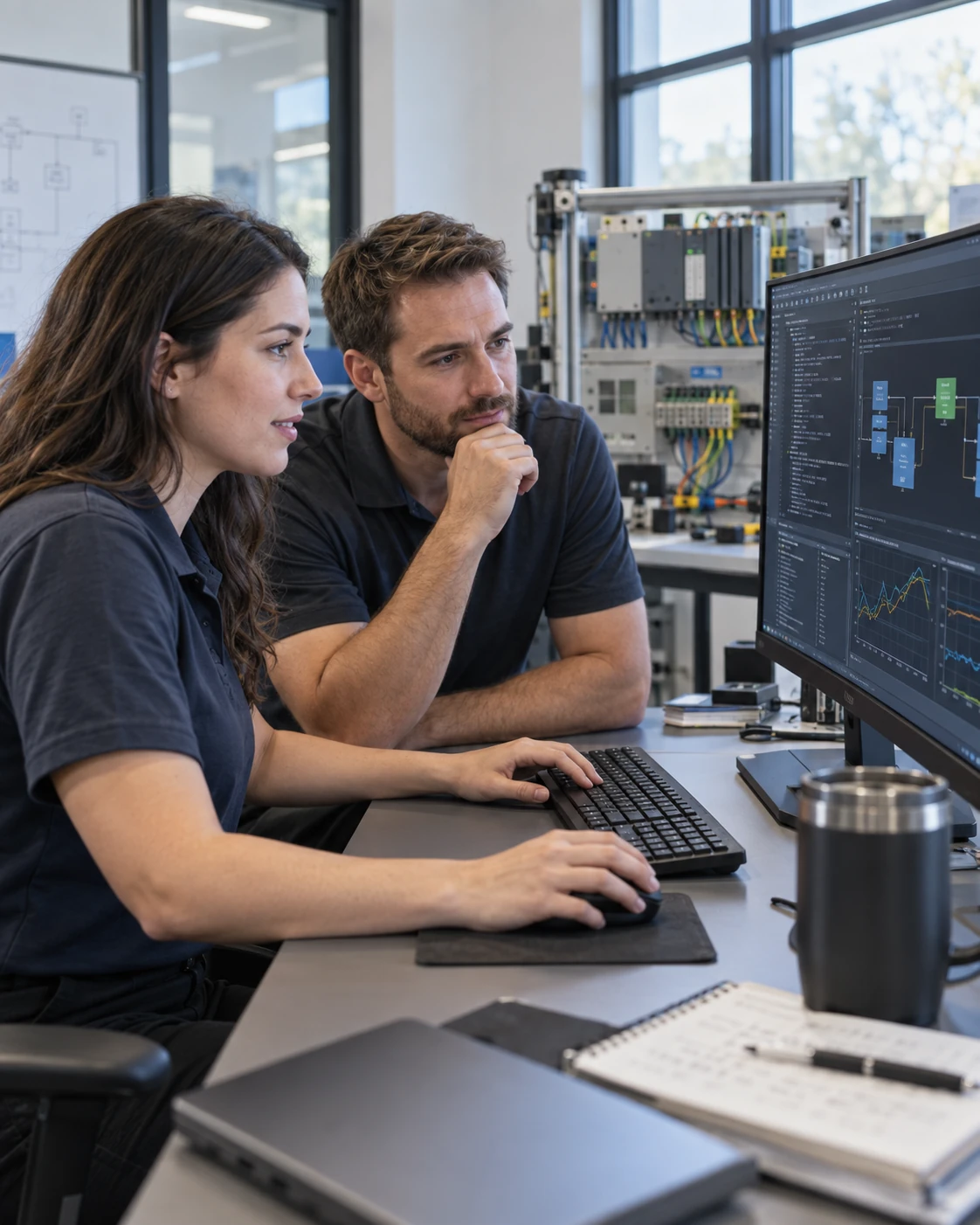
People bring experience, judgment, and an understanding of the job. Robots can contribute repeatable motion and take on physically demanding or repetitive work. We develop ways to combine those strengths, with clear handoffs and controls that people can understand.
That includes how an operator sets up a task, sees what the robot is doing, and intervenes when something changes. The task, tooling, workspace, and safeguarding all need to be considered together. Human-robot collaboration is a system design problem as well as a software problem.
The same questions about perception, adaptation, and human interaction appear in other settings. These areas help shape our longer-term research direction.
We explore the potential for robotic systems to assist people in care settings and support work that requires controlled, precise movement. Human interaction, clear supervision, and dependable behavior are important research questions in this area.
Crop monitoring, handling, planting, and harvesting present changing environments and natural variation. These applications inform our research into robots that can recognize what they encounter and adjust how they carry out a task.
Our approach brings robotics, software, and controls engineering together through development and evaluation.
Work from the task, the environment, and the people involved. We consider what the robot needs to sense, how it should act, and how its controls connect with existing operations.
Build and evaluate prototypes, examine unexpected results, and refine the design. Variation and failure cases help reveal where perception, planning, or control needs more work.
Develop software and controls that can be adapted to different requirements. Customization and scalability are design goals, so new tasks and equipment can be considered as the system develops.
Engineers, domain experts, and end users see different parts of a problem. Bringing those perspectives into development helps us build systems that are useful and understandable in practice.
We consider how robotic systems affect people, working conditions, and resource use. Reliability, appropriate oversight, energy use, and material efficiency are part of the questions we work through during development.
Education and training matter alongside the robot itself. People need to understand how to operate a system, recognize its limits, and respond when it needs attention. Sharing that knowledge is part of our approach.
We research and develop robotic systems with a focus on controls, AI, and software. Our work explores perception, adaptive behavior, motion coordination, and human-robot interaction, with industrial applications at the center.
AI can help a robot recognize its surroundings, interpret sensor data, and plan how to respond. Our research connects those capabilities with the controls that carry out a task and the feedback used to check its outcome.
Collaboration can include dividing tasks, handing work between a person and a robot, or supervising automated work. The design needs to account for the task, tooling, workspace, operator controls, and safeguarding. The way people interact with the system is part of the development work.
Yes. Healthcare assistance and agriculture are application areas that inform our research into adaptable robotic systems. We also explore related challenges in satellite robotics, where remote operation and autonomy become especially important.
Yes. Bring the task, operating conditions, and difficulties your team is facing. We can discuss the research and development involved, including perception, controls, software, human interaction, and how to evaluate the system.
Our AI research explores learning and decisions. Real Smart Home examines how connected systems adapt to people and changing routines. Both bring related questions about sensing, control, and coordinated action into our development work.
For industrial project delivery, explore our integrator services. For the wider development program, visit Research & Development.
Tell us about the task, the changing conditions, and where today's approach falls short.