
Comfort before you ask
We are developing ways to anticipate comfort needs from routines and preferences. That could mean preparing the temperature before someone gets home, or adjusting lighting as a room shifts from working to reading to relaxing.
A home that learns how you live.
At PITCO Engineering, we are developing the AI, controls, and software for a home that learns from the people who live there. A home that can anticipate the evening routine, adjust when plans change, and coordinate its systems with less day-to-day effort from you. That is the idea behind our Real Smart Home research.
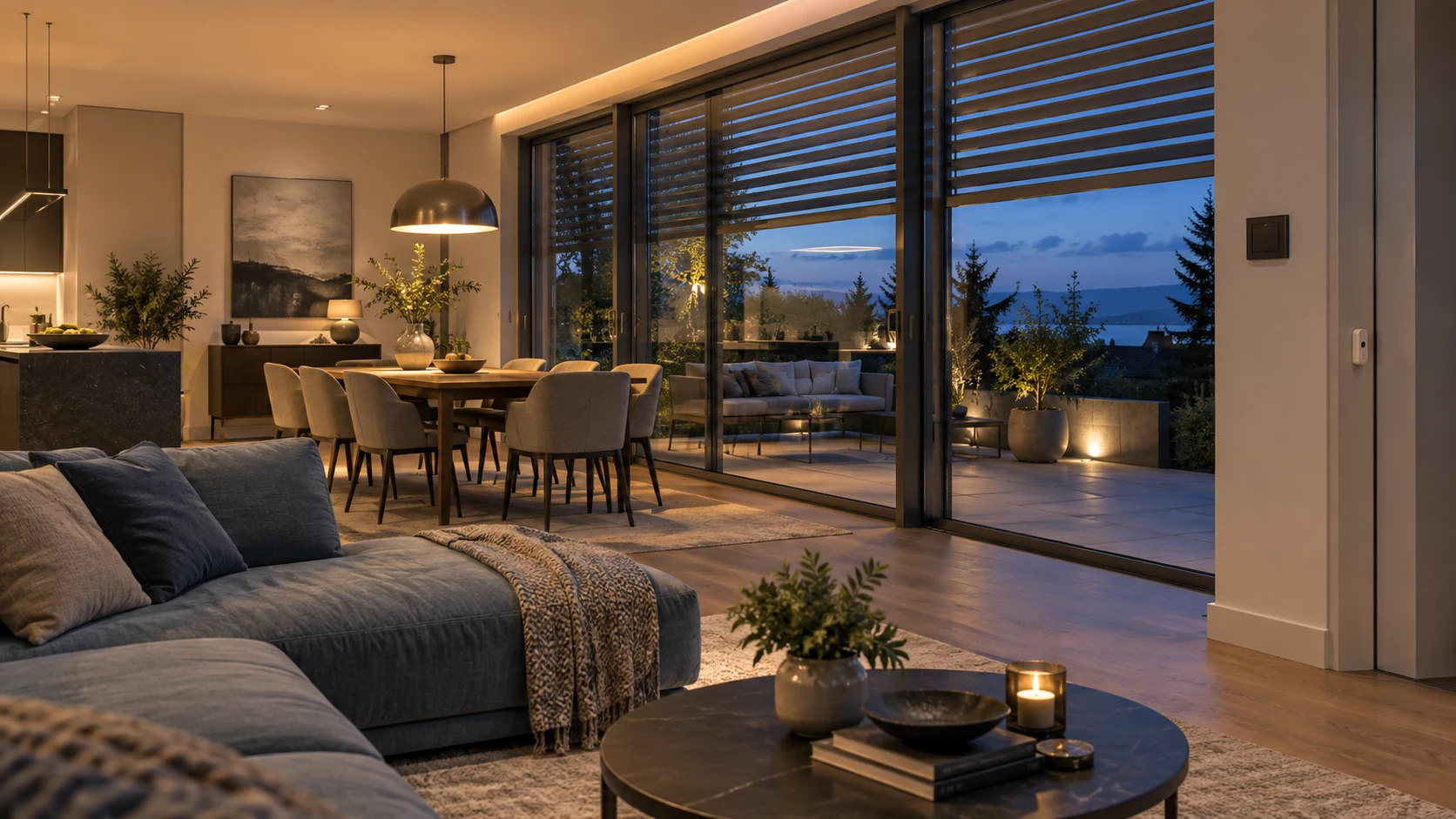
Turning on a light from your phone is useful. So is asking a voice assistant to change the temperature. Our research asks what happens when the home can work out more of those adjustments for itself.
We bring AI and machine learning together with the systems that manage the home. The aim is to understand patterns in how rooms are used, learn individual preferences, and turn that understanding into useful actions across lighting, heating, security, and entertainment.
The temperature is comfortable when you arrive. The lights suit what you are doing. Later, the house settles into the evening routine without a series of separate commands.
If the plan changes, you can change the settings. The home should learn from that, too.
Four connected areas guide our Real Smart Home development.
We are developing ways to anticipate comfort needs from routines and preferences. That could mean preparing the temperature before someone gets home, or adjusting lighting as a room shifts from working to reading to relaxing.
A home should account for which spaces are in use and what is likely to happen next. Our research looks at how learning can coordinate heating, cooling, and lighting to reduce unnecessary energy use while maintaining comfort.
We explore how a system can learn familiar patterns and recognize activity that deserves attention. The goal is to make alerts more useful by distinguishing unusual events from ordinary changes in daily life and reducing false alarms.
Lighting, heating, security, and entertainment each affect the experience of being at home. We develop the integration and control logic that allow them to share information and respond together to the same situation.
People rarely live by one fixed schedule. Work hours change, visitors stay over, and a room can serve several purposes in a day. A useful home system needs to learn those differences and keep adjusting as life changes.
Our work looks at how patterns become preferences, how the system recognizes a new routine, and when it should ask instead of assume. Personalization should make the home easier to live in, with familiar controls available whenever someone wants something different.
Recognize when a room is usually used and the lighting or temperature its occupants prefer.
Coordinate the relevant systems ahead of the expected activity, within the preferences people have set.
Adjust when someone changes a setting or the usual routine no longer applies. Use that feedback to refine future behavior.
Our focus is the AI, software, and controls behind the experience. How people live with those systems matters as much as what the systems can do.
We design around the people living in the home: their routines, preferences, and ability to change their minds. Controls should be intuitive, and automated behavior should be understandable and easy to adjust.
Learning about a household involves personal information. Our development considers what data is needed, how it is protected, who can access it, and how residents control its use. These questions belong in the architecture from the start.
This work brings controls engineering, AI, machine learning, and user experience together. We welcome collaboration with people who understand both the technology and the practical realities of living with it.
A Real Smart Home is our research and development concept for a home that learns routines and preferences, anticipates needs, and coordinates its systems around the people living there. It brings AI and machine learning together with lighting, heating, security, entertainment, and the controls connecting them.
An app or voice command gives someone a way to request an action. Our research focuses on helping the home recognize when an action would be useful and coordinate the response across systems. People still need clear ways to set preferences, make changes, and guide the automation.
We are developing approaches that learn from patterns of use and from the adjustments people make. The system needs to recognize when an old routine no longer fits, respond to a new one, and ask for input when the situation is unclear.
We research ways to reduce unnecessary heating, cooling, and lighting by accounting for how the home is used. For security, we explore recognizing unusual activity and making alerts more relevant. Energy savings and alert accuracy are outcomes to evaluate as the system develops.
They are part of the system design. We consider the data needed for learning, how it is protected, and how residents control its use. People should also be able to understand and adjust automated behavior as their needs and preferences change.
Our AI research examines how systems learn, adapt, and act. Our robotics research explores sensing, movement, and control. Real Smart Home brings related questions about coordination and autonomy into everyday living.
Explore the full program on our Research & Development page.
Bring a use case, a technology, or a research question. Let's explore how it could contribute to a home that learns and adapts.